
Post Go-Live: Don’t Use New Software to Recreate Old Processes
| Published: Aug 17, 2026 | Accounting , Ag sales , Agronomy , Equity and Patronage , Grain , News , Tips | read
 read
readThe Process: Stop Recreating the Past and Start Transforming Processes to Realize ERP Value
The real value of new software solutions comes from changing how work gets done. Successfully implementing a new ERP system is a significant accomplishment. Employees have been trained, data has been migrated, and the software is finally live. The organization is ready to move forward.
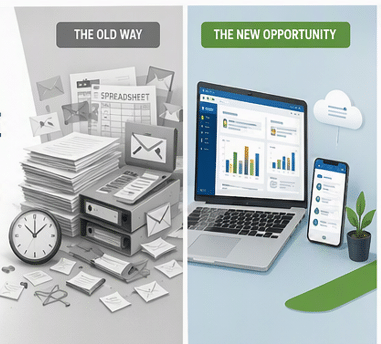
Yet many companies unknowingly make a costly mistake after implementation: they continue operating as if nothing has changed. Instead of embracing new workflows and capabilities, they attempt to make the new system behave exactly like the old one.
The result is a modern ERP solution supporting yesterday’s processes. And that often prevents organizations from realizing the return on investment they expected.
The Wrong Question
After implementing a new system, organizations frequently ask questions like:
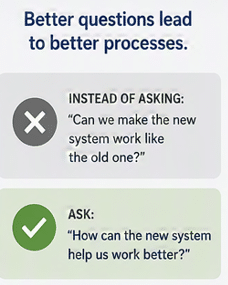
- Can we make the new software work like the old system?
- Can we recreate every report exactly as it existed before?
- Can we preserve our current approval process?
- Can we continue using the spreadsheets we’ve always relied on?
These questions are understandable, but they often point organizations in the wrong direction.
A Better Question Is
Why did we replace the old system in the first place?
Most organizations invest in new software because they want to improve efficiency, increase visibility, automate manual processes, strengthen controls, and support future growth. If the goal is improvement, then simply recreating existing processes may undermine the very benefits the organization was trying to achieve.
Modern Software Is Built Around Better Practices
Today’s ERP solutions aren’t just technology upgrades. They’re designed to support modern business processes. They offer automation, integrated workflows, real-time visibility, improved reporting, and stronger data management. Organizations often discover that the software can accomplish in minutes what previously required multiple systems, spreadsheets, emails, and manual steps. But those gains only happen when organizations take advantage of the capabilities that have been implemented. When every process is customized to mirror the old environment, the organization may end up spending more money and more effort while gaining very little improvement.
Don’t Customize Your Way Backward
One of the biggest risks after implementation is using customization to recreate familiar processes. Some customization may be necessary. Every organization has unique requirements. However, when customization becomes an attempt to preserve historical habits instead of enabling future growth, it can create long-term challenges.
Excessive customization can increase complexity, make future upgrades more difficult, and reduce the benefits of standardized processes. Before modifying a workflow, organizations should ask:
- Does this process still serve our business well?
- Is there a more efficient way to accomplish the same goal?
- Is the software encouraging us to adopt a better practice?
Sometimes the best answer is not to recreate the old process at all.
A Simple Maturity Model for ERP Success

Organizations that realize the greatest value from ERP implementations often progress through four stages:
- Stage 1: Replace Technology
The new system is implemented and operational. - Stage 2: Adopt New Processes
Teams begin using the workflows and capabilities designed into the system. - Stage 3: Optimize Operations
Automation replaces manual effort, data becomes more accessible, and efficiencies emerge. - Stage 4: Drive Business Value
Leadership gains better insights, employees spend more time on strategic activities, and the organization becomes more scalable.
Many organizations successfully complete Stage 1 but struggle to move beyond it. The opportunity lies in advancing through the remaining stages.
Transformation Requires a Willingness to Change
That often means challenging assumptions that have existed for years. It may require redesigning processes, eliminating redundant steps, or abandoning tools that no longer serve the organization’s goals. These decisions aren’t always easy. Yet organizations that remain committed to process improvement often discover that the benefits extend far beyond the software itself. They gain greater efficiency, stronger collaboration, improved visibility, and a stronger foundation for future growth.
The greatest return on investment comes when technology, processes, and people work together to support the future of the business.