
Streamlining Direct Ship Orders in Commodity Trading
| Updated: Jun 12, 2026 | Accounting , Grain , Product Updates , Release Notes | read
 read
readHistorically, direct ship activity required manual steps and updates. This new feature ensures that inbound and outbound tickets are generated in tandem, applied automatically to the appropriate contracts, and invoiced according to business policy, supporting trading scenarios:
- Rail shipments, where a single order may span over a hundred railcars and large volumes
- Truck deliveries, often handled as one order per load
- Bulk purchases, later allocated across multiple buyers
- Grower-direct shipments, where destination weights often govern settlement
How it Works
In Commodity Accounting > Setup > Commodity Accounting Parameters, users must ‘Enable Outbound Scale Ticket Sales Order’ feature
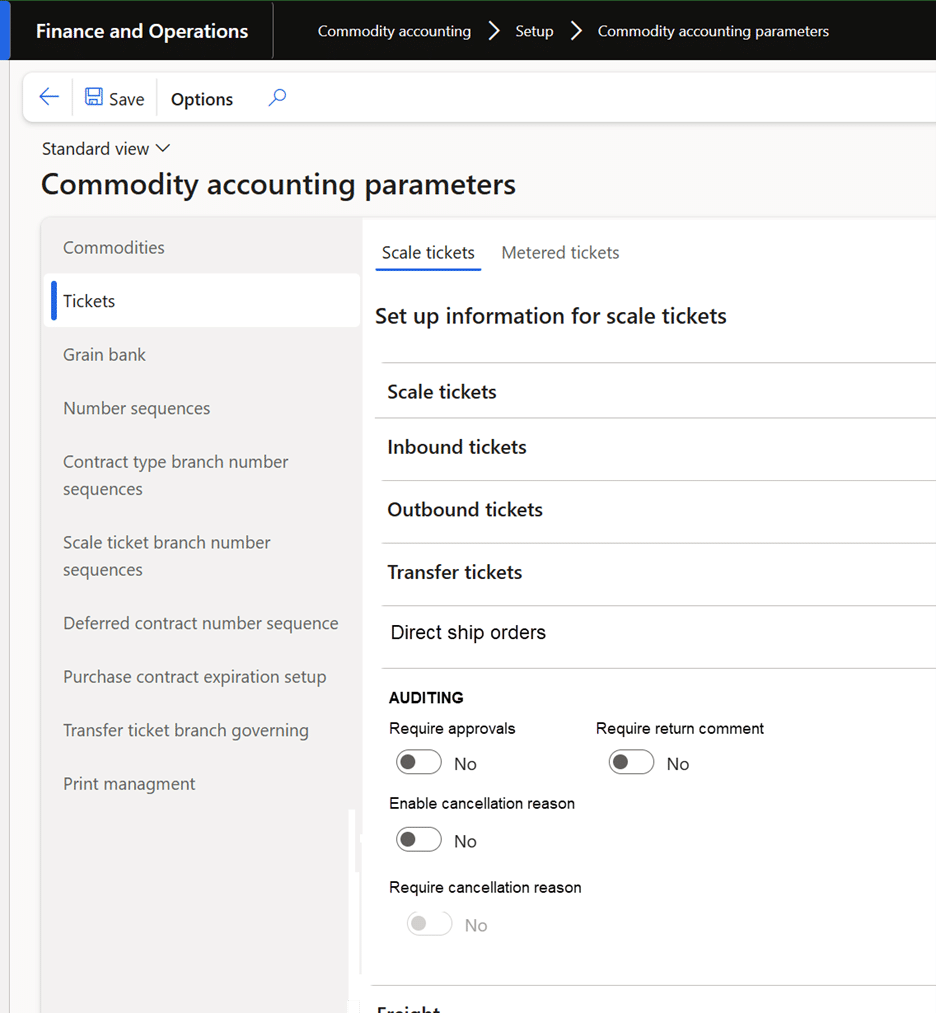
How to Access Direct Ship Order
Commodity Accounting > Direct Ship > Direct Ship Orders
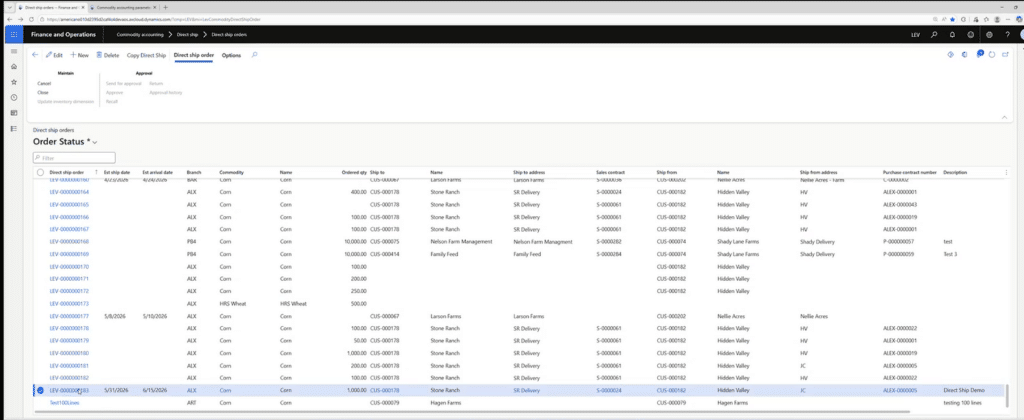
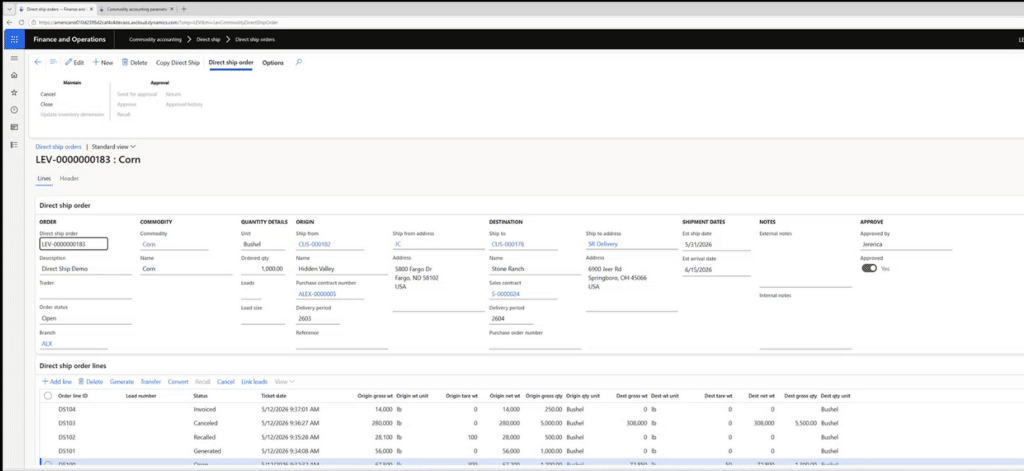
From manual workarounds to purpose-built processing, users can:
- Capture estimated quantities, ship dates, and receipt dates
- Record origin and destination weights and grades as information becomes available
- Generate linked inbound and outbound tickets from the order
- Reapply tickets when governing weights or grades change
- Shift an order from direct ship to company-owned inventory if business conditions change
This approach reduces data entry, improves traceability, and aligns operational steps with how trading teams actually work.
A Smarter Foundation for Direct Shipping
By formalizing the lifecycle of these transactions, this feature design delivers a scalable, auditable, and user-friendly way to manage direct shipments across truck, rail, and multi-entity trading environments.